Learn to row on an erg

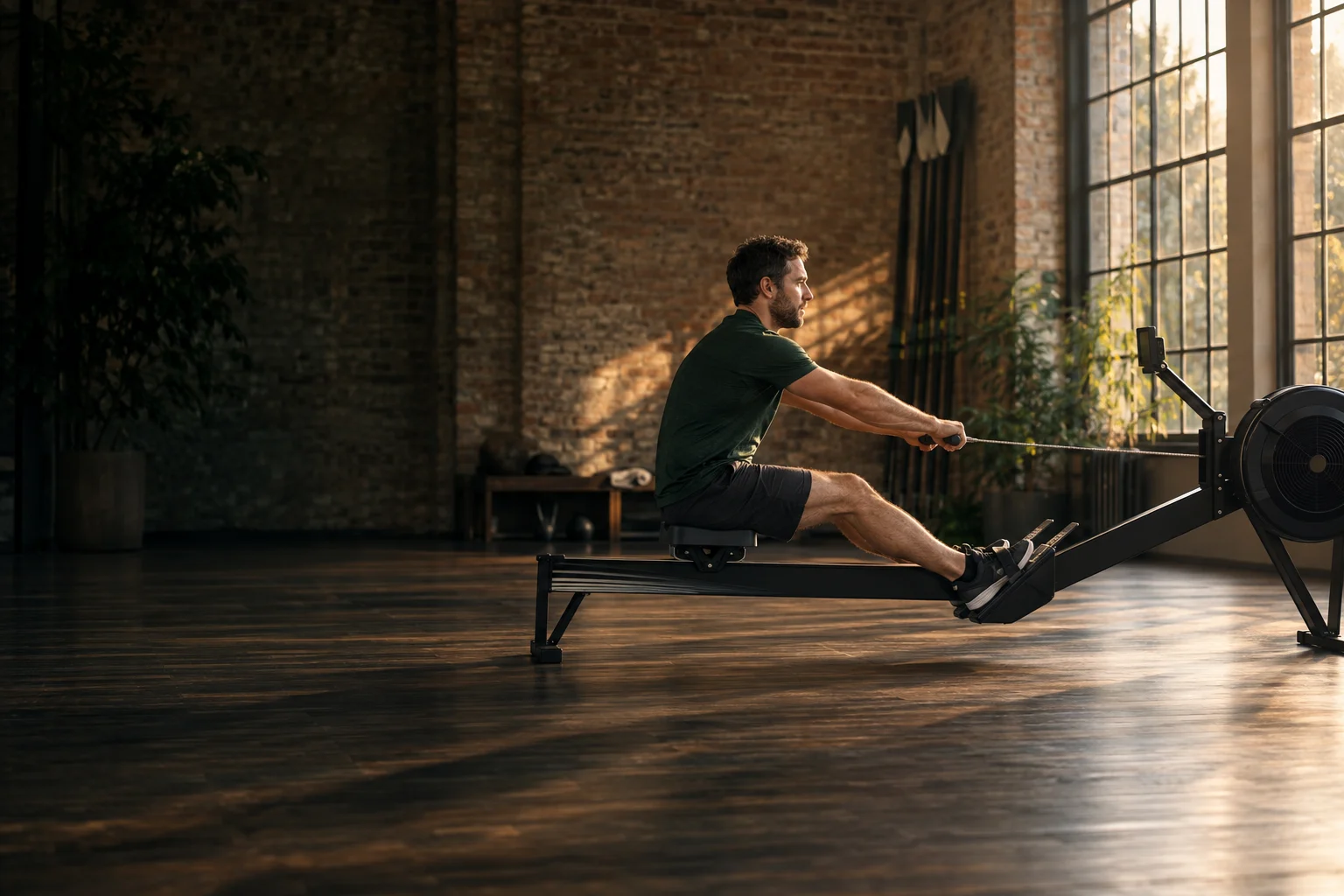
Good rowing is not a hard arm pull. It is a calm sequence: set the catch, drive with the legs, swing through the body, draw with the arms, then recover in reverse.

Rowing stroke cycle Catch, drive, finish, and recovery arranged around an erg rail.
Drive forward with power. Return with patience.

The four stroke phases

1

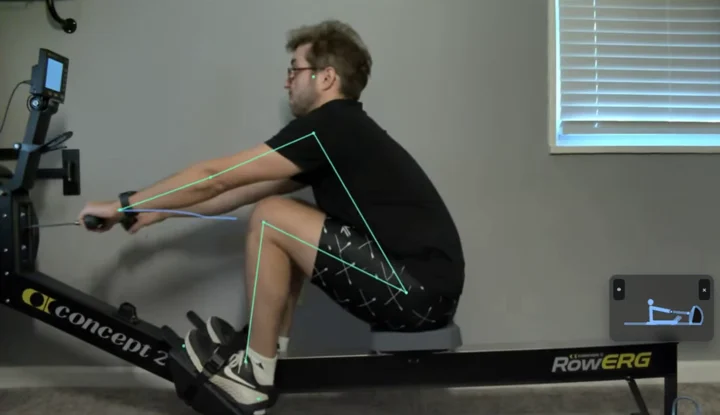
Catch

The start position. Arms are straight, shoulders relaxed, body hinged forward from the hips, shins close to vertical, and the handle is nearest the flywheel.

2

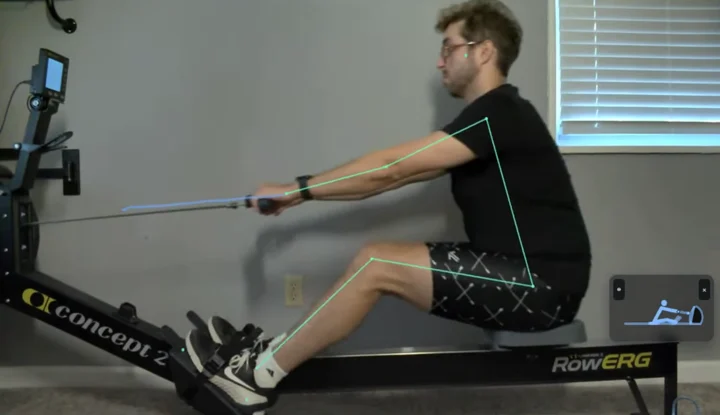
Drive

The work phase. Push the footboards away with the legs first, keep the arms long, then open the body and finish by drawing the handle to the lower ribs.

3

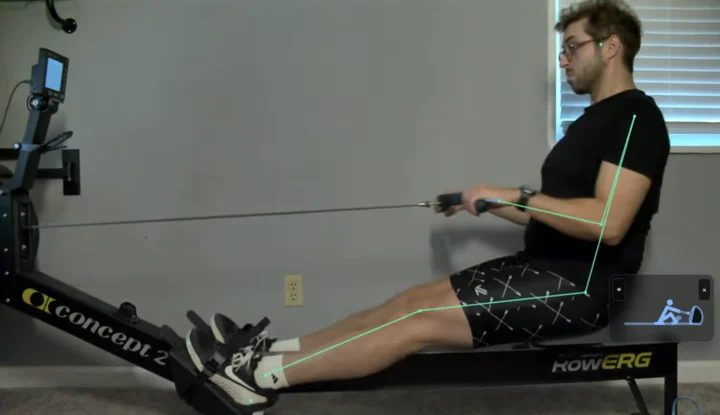
Finish

The end of the drive. Legs are long, core is braced, shoulders are low, wrists are flat, and the body leans back slightly without collapsing.

4

Recovery

The reset phase. Move in reverse order: arms away, body over, then knees bend as the seat rolls forward. This should feel controlled, not rushed.

Step-by-step perfect erg stroke

  1. Set the machine. Adjust the foot stretchers so the strap crosses the ball of each foot. Start the damper around 3 to 5 while learning, then use drag factor later for repeatable feel.
  2. Sit tall before you move. Hold the handle lightly in the fingers, keep wrists flat, relax the shoulders, and stack the ribs over the hips.
  3. Build the catch. Slide forward until the shins are near vertical or as close as comfortable. Hinge from the hips, keep the spine neutral, and do not reach by rounding the back.
  4. Start the drive with the legs. Press through the feet as if pushing the machine away. The handle and seat should move together at first, with straight arms and a quiet upper body.
  5. Open the body after the legs begin. As the knees move down and the legs approach extension, swing the torso through vertical with the core engaged.
  6. Draw the arms last. Bring the handle straight to the lower ribs. Elbows travel back, shoulders stay low, wrists stay flat, and the chain stays level.
  7. Finish cleanly. Stop with a small layback, long legs, supported trunk, and relaxed grip. Avoid leaning so far back that the next recovery has to climb uphill.
  8. Recover in reverse. Send the hands away first, hinge the body forward second, then let the knees bend after the hands clear them: arms, body, legs.
  9. Control the slide. Let the seat roll forward under control. Do not yank yourself toward the flywheel with the straps or slam into the front.
  10. Keep the rhythm. Think legs, body, arms on the drive and arms, body, legs on the recovery. A useful beginner rhythm is one count for the drive and two counts for the recovery.

Erg terms worth knowing

Erg or RowErg
An indoor rowing machine. Rowers often call it an erg.
Stroke
One complete catch, drive, finish, and recovery cycle.
Stroke rate
Strokes per minute, often shown as spm or s/m. Lower rates help beginners learn sequence.
Split
Your pace as time per 500 meters. A lower split is faster.
Damper
The lever on the fan cage. Higher is not automatically better; it changes how heavy the stroke feels.
Drag factor
A monitor reading that makes machine feel more repeatable than damper number alone.
Foot stretcher
The adjustable foot plate and strap. It should secure the foot without becoming your recovery engine.
Layback
The slight backward body angle at the finish. Strong and small beats long and loose.
Ratio
The timing between drive and recovery. Smooth rowing usually has a faster drive and slower recovery.
Force curve
A monitor graph that shows how smoothly you apply power through the drive.

A simple beginner practice

Pick drill

Row 10 strokes with arms only, 10 with arms and body, 10 from half slide, then 10 full strokes. Keep each layer smooth before adding the next one.

Pause drill

Pause for one second after the arms go away and the body pivots forward. This teaches the recovery order before the knees rise.

Rate cap

Row easy at 18 to 22 spm for five minutes. Make the split change by pressing harder with the legs, not by rushing the slide.

Technique guides

Use these focused guides to recognize one pattern, understand what RowCoach observes, and choose a simple drill.

Common mistakes and fixes

Train carefully

This guide is educational and cannot replace a qualified rowing coach. Stop if you feel pain, dizziness, numbness, or unsafe discomfort.