RowCoach Learn

Why indoor rowing

One stroke. More of you moving.

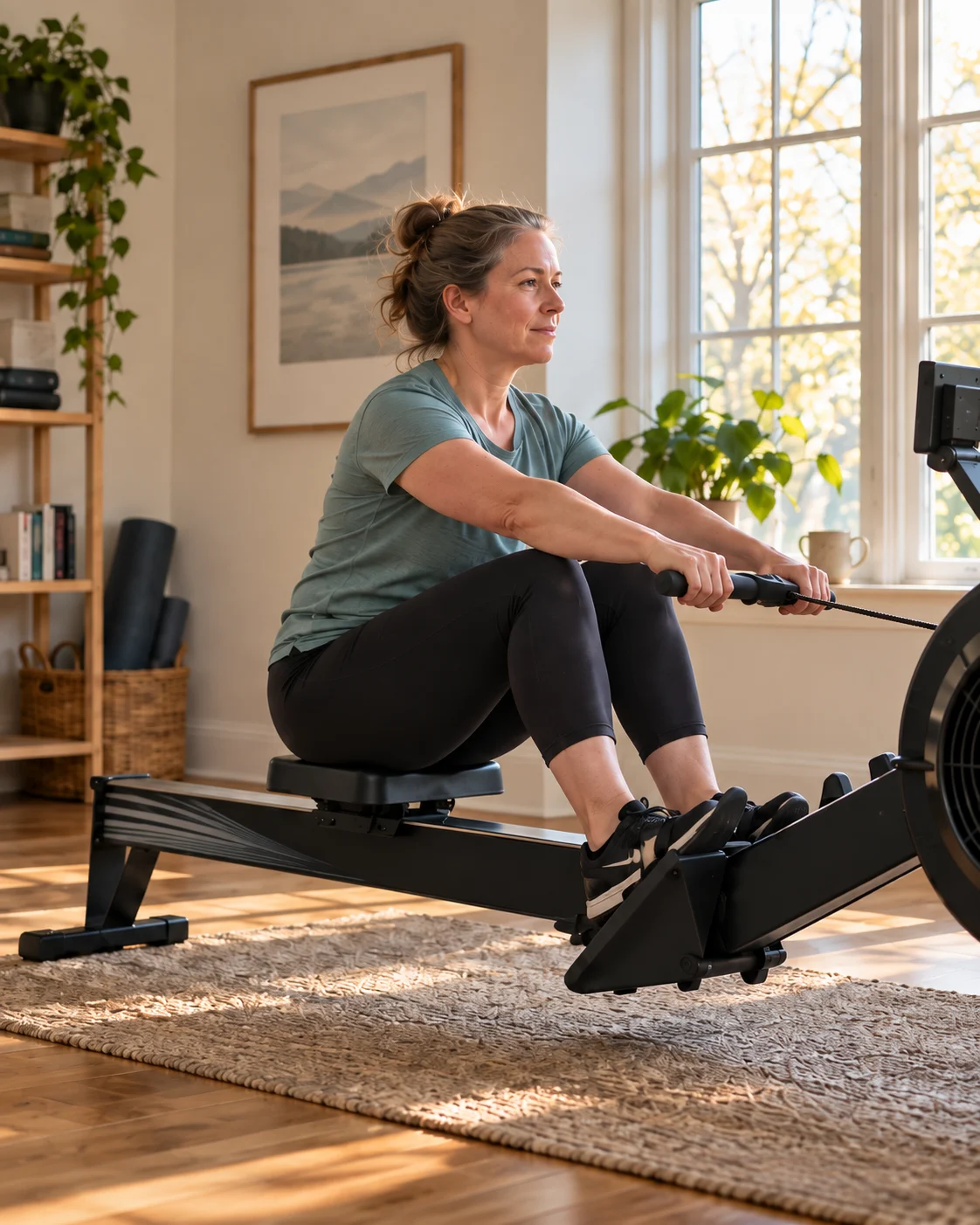
Indoor rowing can turn one repeatable movement into aerobic work that coordinates the legs, trunk, and upper body. You control the effort, from an easy technique row to a demanding interval.

One connected stroke

  1. 01LegsStart the drive
  2. 02TrunkConnect the power
  3. 03Upper bodyFinish the drive
  4. 04Heart + lungsSupport the effort

Power travels through a sequence—not four separate exercises.

Why go row indoor

Eight practical reasons to row.

Whole-body. Low impact. Adjustable. Easy to begin. Indoor rowing gives one movement more ways to keep earning a place in your routine.

01

Many starting points

Indoor rowing can meet you at many ages, abilities, body types, and fitness levels. Adjust the machine, pace, and comfortable range of motion to your starting point, then build from there. Personal health, supervision, and equipment fit still determine what is appropriate for each rower.

Broadly adaptable does not mean universally suitable.
02

Total-body cardiovascular work

Each stroke engages about 85% of your muscles across nine major muscle groups while challenging your cardiovascular system. That figure is a general exercise estimate, not a personal measurement, but rowing research supports the combination of large-muscle movement and substantial oxygen demand.

Legs, trunk, and upper body contribute in one sequence.
03

Core strength and movement

The trunk connects the leg drive to the handle and controls the forward and backward body hinge. Repeating that supported movement can challenge trunk strength and control through a comfortable range; it does not guarantee flexibility.

The core transfers force; it does not replace good sequence.
04

Low-impact, self-paced

The stroke is seated and has no repeated foot strike, which is why indoor rowing is commonly described as low impact. You control the effort and speed, but joints and tissues still carry load when technique, volume, or intensity changes. It can serve cross-training; rehabilitation should be individually guided.

Low impact is not no risk.
05

Meaningful energy demand

A vigorous 30-minute row can burn more than 300 calories. Actual energy use varies with body size, effort, technique, duration, and the machine’s estimate, so that figure is an illustration rather than a promise.

Use pace and consistency to guide the row—not a calorie guarantee.
06

Basics are learnable

The movement has four recognizable positions and one repeating order: legs–body–arms on the drive, then arms–body–legs on the recovery. Light-pressure practice lets a beginner organize the sequence before adding speed or power.

Simple to begin; worth refining over time.
07

Easy to access

Indoor rowers are available in many gyms, workplaces, rowing clubs, and homes. A predictable machine setup makes it possible to repeat the same basic movement without needing water, a boat, or a full crew.

Access still depends on equipment, space, and support.
08

Variety and challenge

Row alone, join a class, follow a steady workout, alternate hard intervals with recovery, log progress, enter a charity challenge, or race. Competition is optional; the machine supports many ways to keep the work engaging.

Change the workout without changing the movement.

Where it fits

Let the effort determine the job.

General U.S. guidance asks adults to combine aerobic activity with separate muscle-strengthening work. Rowing can contribute to the aerobic target when the effort is moderate or vigorous; simply feeling your muscles work does not automatically replace a strength program.

01 · Technique

Easy enough to organize.

Use light pressure to learn the legs–body–arms sequence without chasing speed.

02 · Steady work

Repeatable aerobic effort.

Choose a pace you can sustain while the stroke remains controlled and consistent.

03 · Intervals

Hard work with recovery.

Use short demanding pieces only after the movement and machine setup feel dependable.

Make the benefit repeatable

Begin with the stroke you can control.

Learn the movement before adding pressure. Increase duration or intensity gradually, and leave room to recover. Stop if you feel pain, dizziness, numbness, or unsafe discomfort.

If you are returning after inactivity, managing a health condition, recovering from injury, or unsure whether rowing suits you, seek guidance from a qualified health professional.

Read the evidence

Claims with their limits attached.

Exercise benefits depend on effort, frequency, progression, health, and the rest of your training. These sources support the general activity guidance and rowing-specific physiology described here.